
Setting forth on any path, we need to take small daily (or frequent) steps and also have a long term view of where we are going. Along the way, we learn, overcome obstacles, meet some of the same challenges again and again, and find the joy of living and relationship. With over 20 years experience of yoga practice, as a yoga teacher I draw from my extended study with the founders of the Shadow Yoga school, life experience to describe some of the things that help me and give me insight.
Tuesday, November 22, 2011
The stuff that binds us
Here is a Gil Hedley video (only a couple of minutes long) which explains how our bodies gradually become stiff (to a mild extent during the night) and in the case of injury or habitual behavior, our movements become more limited, and we become more stiff. This video shows the way tissues get bound together, by using a cadaver, and is worth watching.


Wednesday, November 16, 2011
Gratitude and Perserverance

At the Thanksgiving time of year, I often think of BKS Iyengar. Mr. Iyengar, now a world-renowned teacher, was born into the influenza pandemic of 1918, and was a weak and sickly child. He began to practice yoga under the guidance of Sri T Krishnamacharya in the 1930's, and continues this work even today, in Pune, India. When I read articles and books by Mr. Iyengar, who was my teacher’s teacher for many years, I am aware of the continuous thread of acceptance and relentless inquiry. “In 1979,” he says, “Immediately after my sixtieth birthday, I had two scooter accidents. These set the clock back so much I had to begin yoga all over again as a raw beginner. … It took me more than eight years to fight and regain control over my body-and-mind. This was through my determined effort to get back into yoga, and yoga graced me to embrace it with reverence.” How many of us would bounce back after such a set back? And yet, set backs are a part of life.
In these modern times of short-term plans and thinking, I find it inspiring to reflect upon the experience of people who have a longer term view. Iyengar has practiced for nearly 80 years. My teacher has likewise put over five decades into his practice, and perhaps it is the glimpses of what the practice reveals that keeps them at it, and continues to enliven them as teachers and practitioners.
Something has to enliven us, inspire us, and encourage us, because the practice of yoga is not easy. There are challenges at every turn, and while challenge and work can be invigorating, it can also be tedious and discouraging. Iyengar, in his summary of the Yoga Sutras in the introduction of his classic book, Light on Yoga, reminds us of the distractions and obstacles on the path of yoga: Sickness, languor, laziness, doubt, indifference, sensual desire, invalid understanding, the failure to maintain a continuity of thought, and the inability to maintain that which has been attained through practice. In addition, we may experience pain, despair, and unsteadiness in the body and/or breath. In the face of these obstacles, how to keep going? The answer is found in nearly every yoga book and text: with faith and daily practice.
With a bit of writing each day, you are sure to one day have written a novel. With a few steps you can begin a long journey. Likewise, with a bit of practice each day, you will see a result over time. Commitment and consistent practice are key to success with yoga. By success I mean a rewarding experience from which you will gradually comprehend what is real and what is not, who you are and who you are not, and develop the ability to see and understand clearly.
Consistent practice is also the remedy for lack of tapas. Tapas literally means “to burn”, and in the context of yoga refers to discipline, ardent desire, that which inspires us to dedicate ourselves to a craft such as yoga. The teacher and writer Donna Farhi has compared practice to a fire: it takes a little bit of fuel, added consistently to the fire, to keep it going. A huge log will smother the fire, and smolder. A lack of fuel will cause the fire to go out. When we begin a practice, it is like lighting a fire, which must be tended regularly, lest it go out, but not over-done, in which case we’ll get bogged down with exhaustion or injury.
It is with the burning enthusiasm of tapas that we forge ahead, when we feel too busy, or tired, or happy, or hungry, or distracted, or too bored to practice. We can take these feelings into account, and then proceed with our practice. The rhythm of a consistent practice starts to move forward on its own momentum, so that it is easy to keep going, like a fire that has burned for some time, and has some glowing coals and warmth.
This is one reason that I teach month-long classes: because it is only through the experience of consistent practice that one can see the benefit of it. It is one thing to understand the theory, but another to have the experience. Another reason that I teach this way is that the Shadow Yoga practice is best learned in a series of classes, since in the beginning, students must learn the prelude sequences, and once learned must practice them. Likewise, it allows me to get to know the students in class, which is an essential aspect of the teacher/student relationship.
I am aware that it is a commitment to sign up for a month-long course. Simply this commitment, and the act of getting out of bed, and into the yoga studio each morning are a type of practice. Any challenge to your usual way of doing things and routine requires a bit of tapas to forge a new habit, or at least take a break from the existing one. In some ways, this is the most difficult part. Until we have the experience of practice, it is hard to convince oneself to get up out of a warm bed, or that extra hour of sleep, in order to come to yoga class. Over the long term, it’s worth it. Until a student has that experience, they have to trust me enough to take my word for it, or look to people of wisdom and experience whose example resonates with them.
Once do we begin practice, we are confronted with our own limitations, but also our strengths. We can be grateful that we did find the fortitude to get up and come to class, and we can be grateful that we have the strength and health to participate. It is the things that are going well, and working for us, that will support us to address the things that are not working so well.
My teachers and mentors describe set-backs, missteps, accidents. They recount times when they followed one path, then later saw things differently and changed their direction. A good teacher can save us some time, and some mistakes, but ultimately we are all on the same sort of journey, and when following a new path will sometimes find unexpected things, both difficulties and welcome surprises. Through these ups and downs, we can maintain a steady course, with consistent practice, and acceptance of the inevitable fluctuations between the days when you can’t wait to practice and everything is easy, and the days when it’s the last thing you want to do. Perhaps within the thing perceived at first as a weakness, or set back, we will find a greater strength. Despite doubts, obstacles, and setbacks: Practice anyway, with intelligence and patience.
Yoga is a very real opportunity to experience in a direct and authentic way. It is sometimes a real pain, and it is a great gift.
In Mr. Iyengar’s article, How Yoga Transformed Me, (most of the content of which can also be found in his book, Light on Life), Iyengar says of his early days:
My hard practice caused agony to my body, to my nerves, and to my mind and even to myself. I was tossed from one side to the other; sometimes the body refused to co-operate, and at other times the mind would not bear the pain. This way my body and mind oscillated. My energies were sapped and mental fatigue set in. If I did not try, the self within grew restless: if I tried, failure brought on dejection. Very often exhaustion brought me to the point of collapse. I could neither eat nor drink with comfort. Though I continued practicing yoga for years, dejection and doubt tormented me and my mind found no rest except in renewed effort. Each day was an ordeal but God’s grace forced me to make one more attempt for every failure. As I had no guide, I made enormous mistakes but I learned discrimination from observing my own errors. When circumstances forced me to live on my own, I had to go without food for days. Often I lived only on a cup of tea, but the inner flame kept on goading me to do my daily practice with zeal. Slowly, I began to feel that my body was growing in strength, my restless, agitated mind was gaining stability. Though I started with the practice in 1934, It was only in 1946 that an innate interest in yoga arose in me. ....…. Even though age is telling upon me, I am still experiencing new feelings. I do not hesitate to share the light of my new experiences with my pupils. I live in my cells and I live in my heart. I would like to practice yoga till my last breath, as a humble service to yoga. My only wish is to prostrate before God, surrendering my last breath in a yogic posture.
(this last quotation is from an article by BKS Iyengar: “How Yoga Transformed Me”)
Monday, December 6, 2010
Yoga teachers, teach!
A friend posted this article from Susan Piver, on the subject of yoga classes nowadays, and how they can be lacking in instruction.
Tuesday, September 28, 2010
Teaching and Shadow Yoga

I am sometimes asked by teachers whether they can integrate some of the movements from the Shadow Yoga practice into their classes. The short answer is: it’s not a good idea. Here is a longer answer.
Yoga practice is systematic: each movement has a particular reason for why it is practiced, and where it appears in the course of the practice. This is true not only for each movement, but for each gesture and transition from movement to movement. The Shadow (Hatha) Yoga practice is like a combination lock; one thing follows the next, and the practice is effective because of the efficiency, specific sequences, and rhythm. It has been brought forth with consideration of the vayus, and nadi systems of the subtle anatomy. The understanding of all this can only come from personal experience supplemented by guidance from an experienced teacher. This is true of all useful yoga practices, but not always true in the modern world of popular yoga.
There aren’t very many Shadow Yoga teachers because the school’s founder, Zhander Remete, knows and has guided everyone who teaches it. This is to ensure things don’t go wrong through misunderstanding or confusion. Traditionally, yoga has been taught directly from the teacher to the student. Zhander offered guidance to those of his students who were inclined to teach, but his "program"-such as it is-has been limited to few people, maybe 40 students world-wide over the past 6 years.
Nowadays, there are many one-week or one-month, or 500-hour teacher trainings. In this case, there may be little relationship between the teacher and the student, and perhaps no recourse for the student to have a guide and ask questions after this brief program is over. Having completed this or that program of training, students are automatically given a certificate of completion. Invariably some unprepared teachers hang out their sign and unsuspecting students put their trust in them. The teacher's pride in having to be the teacher and not make mistakes can lead them to hide their ignorance and inadvertently mislead students.
Many young teachers are aware that they need further guidance and do continue their studies, however it is also essential that we eradicate our own unfounded assumptions and unclear ideas, and teach only what we understand at any given moment, and what is practical and helpful for our students. As “teachers” we can also take ourselves too seriously, causing us to becoming egotistical or inflated. This will create a barrier to our own learning. Rather than becoming attached to the idea that "I am a yoga teacher" or even "I am a yoga practitioner" (or any other set idea), an open mind includes the possibility that we've taken a turn in the wrong direction, and allows us to be free. It is through practice and honest observation of ourselves that we may come to this point by seeing clearly who we are and where we are.
I had taken courses from Zhander and Emma Balnaves for a couple of years before I began a more intensive course of study with them, traveling once or twice per year to study with them for 3 to 6 week periods. Out of the group of 25 international students I began this program with, only 9 were accepted into the 'teachers course" at the end of three years. This is because Zhander is more concerned with the state and progress of individuals than churning out 'teachers' who are unprepared. This shows great compassion, since it will prevent the young teacher from getting into more than they can handle, and will prevent the confusion and injury of the innocent people who would come to study with them.
Zhander brings a great deal of energy and attention to his teaching, and to those students he works with over the course of many years. From him I have learned that slowly through practice we reveal a mirror in which we can see ourselves; the way each of us approaches things and thinks and behaves. This allows each person to remain themselves, see who they are, how to respond accordingly, rather than following blindly along and mimicking what our teacher does. Likewise the teacher and student must have some trust and understanding between them. As Zhander has often said, if there is not trust or connection, it doesn't matter how good the teacher is, or how much you try: without a connection, the student won't get much.
As all of us who teach yoga know, it takes greater energy to care and engage with each student and correct things that are not right, than let the whole class glide by. Likewise, sometimes students are happier in class to not be corrected. I have had the experience while teaching of feeling tired, seeing something that is not quite right, and thinking "I could just let that slide." However, it is the responsibility of the teacher to understand a few things, and put forth diligent effort to focus and guide the student. As far as the student goes, it is their responsibility to pay attention, put forth diligent effort, and be receptive. I know from being a student that in the long run it is far more valuable to be corrected and helped even when it is hard work or painful at the time.
It is one thing to understand these concepts, and another to experience them and know them to be true through clear perception and testing them. This is true for all of yoga practice, and is the reason it takes time, patience, and practice to integrate and understand it. Until there is understanding, you must trust that it is not fruitful to take some of the practice out of context and mix it in with something else. The practice bears fruit when worked privately, on it's own, without a lot of fanfare. I was already teaching yoga when I met Zhander Remete, and was arrogant, young, and strong. I didn’t really understand what he was saying when he said "Less is More," and "Practice this for a few years and then we'll see." But I did recognize that he was knowledgeable, was not personally invested in what I did or didn't do, and cared deeply about the practice. So with trust in him I continued to teach what I knew at the time, while practicing and reassessing things in my own practice.
With yoga practice it is a mistake to rush anything, or teach anything you do not understand. Sometimes at first glance we believe we understand something, and it reveals itself later to be completely different. Sometimes practice shows us things about ourselves that we feel in the moment like we would rather not ever see, let alone allow anyone else to see. It is valuable to put your trust in a teacher and not teach or speak about something new, even if your ego suggests that you want to show off, or if your source of income seems to require you to entertain and inspire your students with new tricks. Taking time for ourselves to grow and understand will serve us in the long run. If we are patient, and allow knowledge to take root in us, it will grow and flower and give fruit with time. If we rush, we force the flower to bloom before it is time, and are fooling ourselves and left with nothing.
"In the mid-seventeenth century, Miyamoto Musashi, arguably the greatest martial artist in the history of Japan, wrote:
When you look at the world, the various arts have been tailored to be items for sale. Likewise, a person thinks of himself as something to be sold, and even the implements of these Ways are proferred as merchandise. This mentality divides the flower and the fruit into two and makes much less of the fruit than the flower. In this Way of the Martial Arts especially, form is made into ornament, the flower is forced into bloom, and the technique is made into display: one talks of this dojo or that dojo, teaching this Way or that Way, in an attempt to gain some benefit."
(Musashi quoted from The Demon's Sermon on the Martial Arts, Issai Chosanshi, translated by William Scott Wilson)
Although written centuries ago, one can see the similarity to yoga today, when the practice is made into a display, and one school or another school proclaims itself to be the best. As young teachers strive to make an income or distinguish themselves, they grasp at things they don't understand, and promote themselves as brands or items for sale, before they've integrated much wisdom.
Requirements for success in teaching, then, include: a connection with one’s own teacher, clear understanding of what is being taught and what you are teaching, and students who are open and willing to work on what is given. Beyond that, our fate, our natures, and the events of life may or may not provide us the space and opportunities to teach, so, again, it is wise to practice detachment from being this or that.
The suggestion that this practice should not be taught by those not trained in the Shadow Yoga School doesn't come from greed, arrogance, or pride. It comes from a respect for the practice and a sincere wish that it be conveyed in a safe, helpful and correct way. This would be to support individuals to evolve and adapt, without injury, misperception, confusion or fear.
I am grateful for the investment Zhander Remete has made in teaching, as well as the immense amount of work put into the Shadow Yoga practice, which he assimilated and put forth after decades of practice and investigation. It is a valuable contribution, and one that deserves respect and care in its transmission through others.
Please do not reproduce this article without permission; intellectual property of Lita Batho, August 2010
Thursday, April 1, 2010
There's nothing more exhausting than having an enemy.
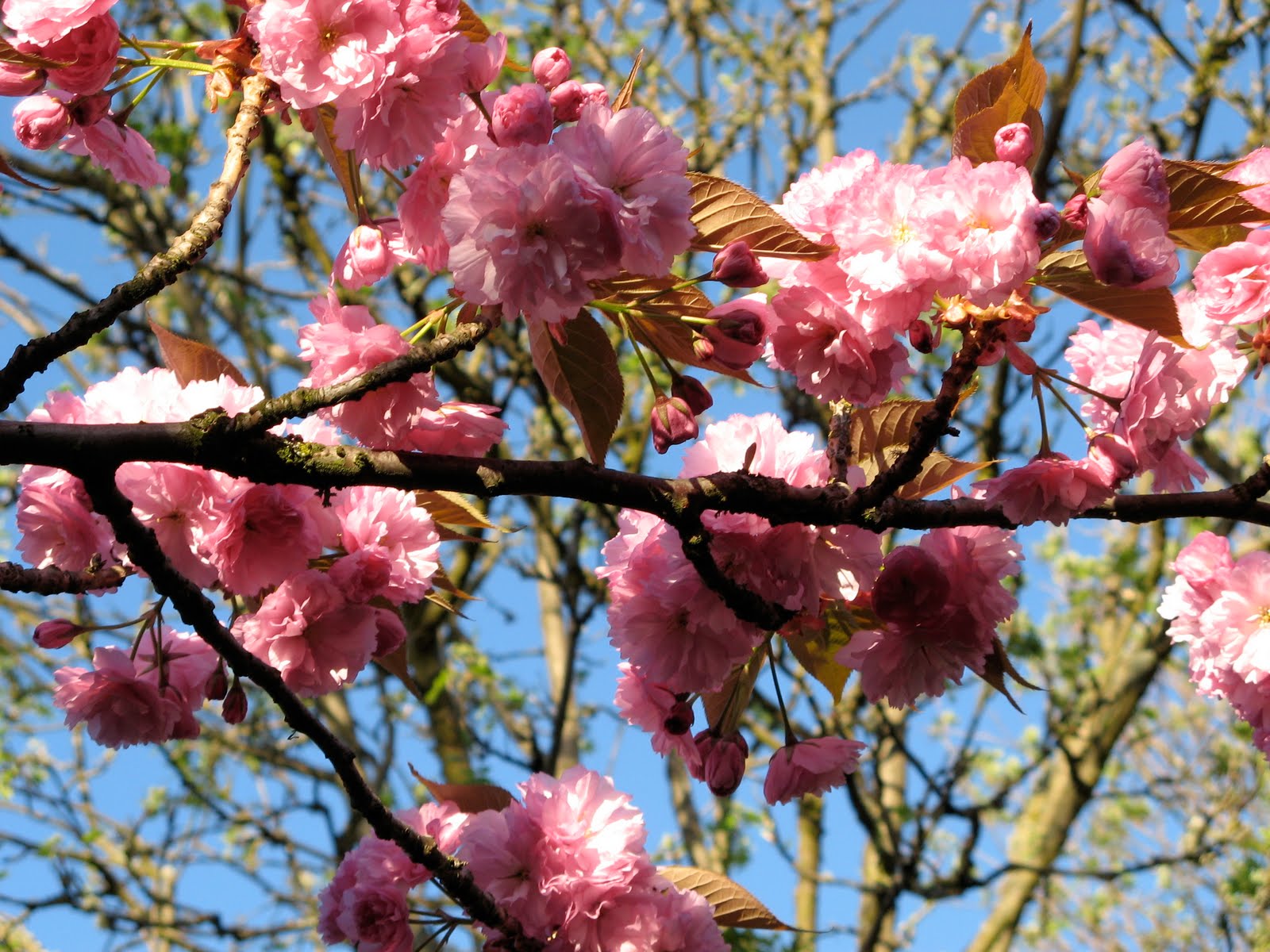
It's April, the trees are blossoming, and this can lead to love and all sorts of complications. I think it's time to revisit Sutra 1.33: the four brahmaviharas.
Although one’s yoga practice is a personal and individual matter, yoga is not a practice for only the ascetic removed from social connections. In fact, as you have surely experienced, it is through interaction with others that our serenity of mind is put to the test.
In Patanjali’s Yoga Sutras, before any mention of the eight limbs (which include breath control, yoga postures, etc), Patanjali, in Sutra 1.33 suggests four steps to create a path toward one pointed, untroubled clarity of mind.
- cultivate friendliness and goodwill towards happy, friendly people
- cultivate compassion towards unhappy people
- cultivate delight towards virtuous people
- have compassion toward those who are not virtuous and are causing suffering
These four attitudes are called the four Brahmaviharas.
The first starts with being friendly towards those who are already our friends. Easy enough. However, this also acknowledges that we sometimes feel jealous of those who are happy or receive success. Instead, we might cultivate admiration and joy at the success of others.
The second of these suggests we not only develop compassion for those people who are not happy, but refrain from judgment, or from feeling superior because they are less fortunate or successful than we are. For instance, the misfortune of another might just as easily be ours, so instead of feeling superior, or grateful that we have dodged the bullet, reflect upon how easily we could be the person who is unhappy and suffering.
The third brahmavihara is to delight in those who are virtuous. We can rejoice that such people exist and emulate them. Keeping company with people you admire and respect can elevate your own behavior and outlook.
Lastly, and possibly the most difficult, is to have compassion towards people who are not virtuous, including those who have hurt you. A common response to feeling wronged, hurt, or mistreated is to harbor ill will, attempt to lift ourselves up by broadcasting the story of our mistreatment, to dwell upon the shortcomings of the person who has done us wrong, and consider them our enemy, or at least a bad person.
Patanjali here suggests that while it may be a stretch to actually Love our enemies, we can develop tolerance towards them. As Marshall Govindam says, “ Do not judge others. Nor should we disregard those who are suffering, but love them as well. Judging others only reinforces in our own minds the qualities that we are condemning. We generally condemn in others what we harbor in ourselves. The world is within us. To change the world, we change our thoughts. Overlook the lapses of others; do not dwell on their weaknesses. By dwelling on their weaknesses we transmit thoughts to them, which only reinforce their weaknesses."
Or, as Donna Farhi says in her book, Bringing Yoga to Life, The last brahmavihara, practicing impartiality or detachment toward those who have harmed us, is the black belt of all the brahmavihara. The Bible tells us to love our neighbors, and to also love our enemies. GK Chesterson once famously added, “probably because they are generally the same people.” If we analyze the content of most of our meditative excursions, we may find them filled with dramatic reruns of arguments, standoffs, and criticisms of our perceived enemies. As the old saying goes, there is nothing more time consuming than having an enemy. We might notice a thorny resistance to changing our point of view because it is so satisfying to be right. Or we play the victim by showing our scars as proof of how badly we’ve been treated. Practicing the fourth bramavihara means we don’t have to hold on to the story and harbor ill-will toward another. By expounding upon the behavior of others, we fortify our ill will and encase ourselves in bitterness.
We can look at how we inflict suffering on ourselves and how we manufacture our own torment by failing to detach from things that we ultimately cannot change in another. Who is suffering when we hold on to these resentments and judgments? We are suffering ourselves. ….we all have it within us to behave in atrocious ways, given unfortunate circumstances. Without condoning the actions of others, by consciously recognizing the same potential in ourselves, and the same qualities, we can develop tolerance, and compassion towards even those who injure us.
Through practicing goodwill, equanimity, tolerance, and delight, we can break the habits of jealousy, judgment, resentment, and bitterness, which ultimately only sap our own energy, poison our happiness, and further disturb those around us.
By cultivating these four qualities, the mind becomes purified, and one-pointed serenity results.
Sutra 1.33 maitri karuna mudita upekshanam sukha duhka punya apunya vishayanam bhavanatah chitta prasadanam
• maitri = friendliness, pleasantness, lovingness
• karuna = compassion, mercy
• mudita = gladness, goodwill
• upekshanam = acceptance, equanimity, indifference, disregard, neutrality
• sukha = happy, comfortable, joyous
• duhka = pain, misery, suffering, sorrow
• punya = virtuous, meritorious, benevolent
• apunya = non-virtuous, vice, bad, wicked, evil, bad, demerit, non-meritorious,
• vishayanam = regarding those subjects, in relation to those objects
• bhavanatah = by cultivating habits, by constant reflection, developing attitude,
cultivating, impressing on oneself
• chitta = mind field, consciousness
• prasadanam = purified, clear, serene, pleasant, pacified, undisturbed, peaceful,
calm
Tuesday, February 9, 2010
Your life is wherever you place your attention.

The study linked to the title of this post assesses the way people of different ages use the internet. Basically, a lot.
It might be said that the internet allows us to tap into a cosmic consciousness, fueled and supported by all of us, albeit an electronically created one. I have heard that some pioneers of internet technology see it as a dream come true, if we could all leave our bodies behind, and somehow upload our consciousness into the ether. Doesn't this actually happen when we are, at times, absorbed in using the internet?
Yoga practice acknowledges that our body and breath are our vehicle to stay alive, and engage in this project of life. The apparent natural and built world around us is called Prakriti in yoga philosophy. Although in ordinary life we are occupied by day to day concerns and activities, through yoga practice we may get glimpses--or ultimately an unbroken awareness of-- the basis that underlies this changeable and fluctuating world in which we live, Purusha.
The internet is a world within that world of Prakriti. As the manifest world around us draws our attention from the source that underlies it all, the internet also draws our attention even further out, into a world within a world.
Consequently, the effect may be that excessive absorption in the external serves to deplete our vitality and our sense of center. Of course we would feel less grounded, if we spend a lot of time absorbed in the ether! Considering that the components of the internet necessarily seek to draw our attention for their own survival (who cares about a website that no one visits), they are most often driven to a certain extent by marketing, capitalism, and a desire for power, in the form of attention, prosperity, and gain.
Yoga practice seeks to reduce our complete occupation with the most apparent, physical world, by reducing greed related activity and impulses. Through moderation in all thing, including yoga practice but also eating, socializing, exercising, and whatever else we need and feel compelled to do, we can grasp the earthly world a bit more loosely, leaving room for awareness of other aspects of ourselves.
So while the internet is now essential to modern life, (and so convenient!) it's something to keep in mind: how much are you being drawn off center, or being absorbed in it, rather than feeling your own life experience and spending time being absorbed in that?
Like running: everything in moderation.
Running barefoot teaches you how to run.

Click the title above for an article on a study of how wearing cushioned running shoes allows people to land on their feet in various ways that they would be less likely to do if they were barefoot; in particular, landing on the heel. Note that running injuries have not decreased, despite continuous innovation in footwear.
A person used to running in shoes, though, is habituated to landing heel-first, so if you try running barefoot, be gradual! (and actually, I don't recommend running, in general)...
But I know some of you do it!
More pertinent to yoga practice, we have experienced that working barefoot gives you much more feedback and sensitivity to the structure of your stance and body.
Going barefoot when possible, such as inside your house, and when weather permits outdoors, also help to keep the feet strong and support the body; and you may find it energizing to put your feet on the earth, beach or a smooth path, when you have a chance. Reconnect to the earth, and your feet.
Subscribe to:
Posts (Atom)