Thursday, April 1, 2010

There's nothing more exhausting than having an enemy.


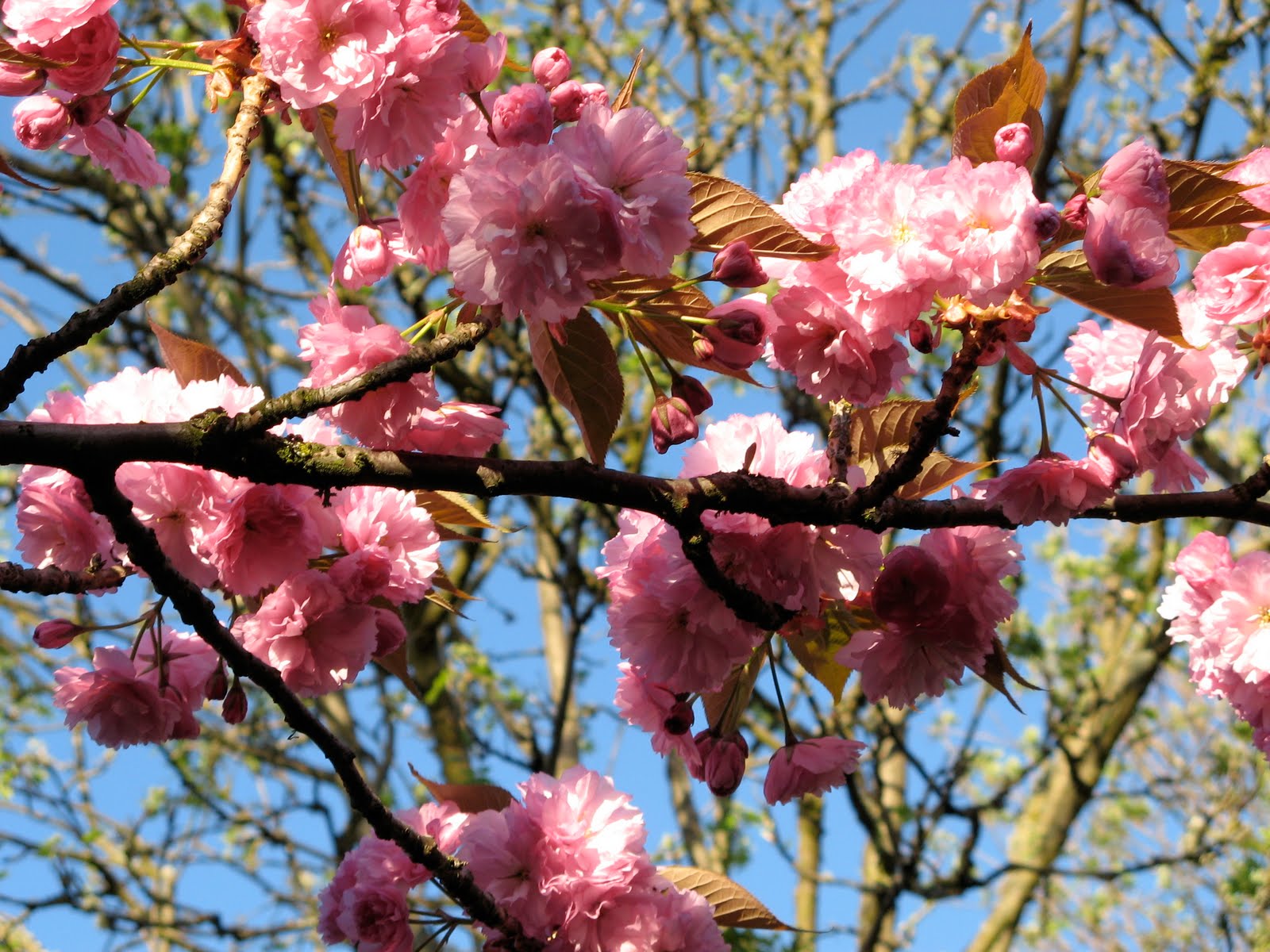
It's April, the trees are blossoming, and this can lead to love and all sorts of complications. I think it's time to revisit Sutra 1.33: the four brahmaviharas.

Although one’s yoga practice is a personal and individual matter, yoga is not a practice for only the ascetic removed from social connections. In fact, as you have surely experienced, it is through interaction with others that our serenity of mind is put to the test.

In Patanjali’s Yoga Sutras, before any mention of the eight limbs (which include breath control, yoga postures, etc), Patanjali, in Sutra 1.33 suggests four steps to create a path toward one pointed, untroubled clarity of mind.

  1. cultivate friendliness and goodwill towards happy, friendly people
  2. cultivate compassion towards unhappy people
  3. cultivate delight towards virtuous people
  4. have compassion toward those who are not virtuous and are causing suffering

These four attitudes are called the four Brahmaviharas.

The first starts with being friendly towards those who are already our friends. Easy enough. However, this also acknowledges that we sometimes feel jealous of those who are happy or receive success. Instead, we might cultivate admiration and joy at the success of others.

The second of these suggests we not only develop compassion for those people who are not happy, but refrain from judgment, or from feeling superior because they are less fortunate or successful than we are. For instance, the misfortune of another might just as easily be ours, so instead of feeling superior, or grateful that we have dodged the bullet, reflect upon how easily we could be the person who is unhappy and suffering.

The third brahmavihara is to delight in those who are virtuous. We can rejoice that such people exist and emulate them. Keeping company with people you admire and respect can elevate your own behavior and outlook.

Lastly, and possibly the most difficult, is to have compassion towards people who are not virtuous, including those who have hurt you. A common response to feeling wronged, hurt, or mistreated is to harbor ill will, attempt to lift ourselves up by broadcasting the story of our mistreatment, to dwell upon the shortcomings of the person who has done us wrong, and consider them our enemy, or at least a bad person.

Patanjali here suggests that while it may be a stretch to actually Love our enemies, we can develop tolerance towards them. As Marshall Govindam says, “ Do not judge others. Nor should we disregard those who are suffering, but love them as well. Judging others only reinforces in our own minds the qualities that we are condemning. We generally condemn in others what we harbor in ourselves. The world is within us. To change the world, we change our thoughts. Overlook the lapses of others; do not dwell on their weaknesses. By dwelling on their weaknesses we transmit thoughts to them, which only reinforce their weaknesses."

Or, as Donna Farhi says in her book, Bringing Yoga to Life, The last brahmavihara, practicing impartiality or detachment toward those who have harmed us, is the black belt of all the brahmavihara. The Bible tells us to love our neighbors, and to also love our enemies. GK Chesterson once famously added, “probably because they are generally the same people.” If we analyze the content of most of our meditative excursions, we may find them filled with dramatic reruns of arguments, standoffs, and criticisms of our perceived enemies. As the old saying goes, there is nothing more time consuming than having an enemy. We might notice a thorny resistance to changing our point of view because it is so satisfying to be right. Or we play the victim by showing our scars as proof of how badly we’ve been treated. Practicing the fourth bramavihara means we don’t have to hold on to the story and harbor ill-will toward another. By expounding upon the behavior of others, we fortify our ill will and encase ourselves in bitterness.

We can look at how we inflict suffering on ourselves and how we manufacture our own torment by failing to detach from things that we ultimately cannot change in another. Who is suffering when we hold on to these resentments and judgments? We are suffering ourselves. ….we all have it within us to behave in atrocious ways, given unfortunate circumstances. Without condoning the actions of others, by consciously recognizing the same potential in ourselves, and the same qualities, we can develop tolerance, and compassion towards even those who injure us.

Through practicing goodwill, equanimity, tolerance, and delight, we can break the habits of jealousy, judgment, resentment, and bitterness, which ultimately only sap our own energy, poison our happiness, and further disturb those around us.

By cultivating these four qualities, the mind becomes purified, and one-pointed serenity results.

Sutra 1.33 maitri karuna mudita upekshanam sukha duhka punya apunya vishayanam bhavanatah chitta prasadanam

• maitri = friendliness, pleasantness, lovingness

• karuna = compassion, mercy

• mudita = gladness, goodwill

• upekshanam = acceptance, equanimity, indifference, disregard, neutrality

• sukha = happy, comfortable, joyous

• duhka = pain, misery, suffering, sorrow

• punya = virtuous, meritorious, benevolent

• apunya = non-virtuous, vice, bad, wicked, evil, bad, demerit, non-meritorious,

• vishayanam = regarding those subjects, in relation to those objects

• bhavanatah = by cultivating habits, by constant reflection, developing attitude,

cultivating, impressing on oneself

• chitta = mind field, consciousness

• prasadanam = purified, clear, serene, pleasant, pacified, undisturbed, peaceful,

calm

Tuesday, February 9, 2010

Your life is wherever you place your attention.


The study linked to the title of this post assesses the way people of different ages use the internet. Basically, a lot.

It might be said that the internet allows us to tap into a cosmic consciousness, fueled and supported by all of us, albeit an electronically created one. I have heard that some pioneers of internet technology see it as a dream come true, if we could all leave our bodies behind, and somehow upload our consciousness into the ether. Doesn't this actually happen when we are, at times, absorbed in using the internet?

Yoga practice acknowledges that our body and breath are our vehicle to stay alive, and engage in this project of life. The apparent natural and built world around us is called Prakriti in yoga philosophy. Although in ordinary life we are occupied by day to day concerns and activities, through yoga practice we may get glimpses--or ultimately an unbroken awareness of-- the basis that underlies this changeable and fluctuating world in which we live, Purusha.

The internet is a world within that world of Prakriti. As the manifest world around us draws our attention from the source that underlies it all, the internet also draws our attention even further out, into a world within a world.

Consequently, the effect may be that excessive absorption in the external serves to deplete our vitality and our sense of center. Of course we would feel less grounded, if we spend a lot of time absorbed in the ether! Considering that the components of the internet necessarily seek to draw our attention for their own survival (who cares about a website that no one visits), they are most often driven to a certain extent by marketing, capitalism, and a desire for power, in the form of attention, prosperity, and gain.

Yoga practice seeks to reduce our complete occupation with the most apparent, physical world, by reducing greed related activity and impulses. Through moderation in all thing, including yoga practice but also eating, socializing, exercising, and whatever else we need and feel compelled to do, we can grasp the earthly world a bit more loosely, leaving room for awareness of other aspects of ourselves.

So while the internet is now essential to modern life, (and so convenient!) it's something to keep in mind: how much are you being drawn off center, or being absorbed in it, rather than feeling your own life experience and spending time being absorbed in that?

Like running: everything in moderation.


Running barefoot teaches you how to run.


Click the title above for an article on a study of how wearing cushioned running shoes allows people to land on their feet in various ways that they would be less likely to do if they were barefoot; in particular, landing on the heel. Note that running injuries have not decreased, despite continuous innovation in footwear.

A person used to running in shoes, though, is habituated to landing heel-first, so if you try running barefoot, be gradual! (and actually, I don't recommend running, in general)...
But I know some of you do it!

More pertinent to yoga practice, we have experienced that working barefoot gives you much more feedback and sensitivity to the structure of your stance and body.
Going barefoot when possible, such as inside your house, and when weather permits outdoors, also help to keep the feet strong and support the body; and you may find it energizing to put your feet on the earth, beach or a smooth path, when you have a chance. Reconnect to the earth, and your feet.


Sunday, November 1, 2009

Dr. Robert Svoboda: Seattle, 2009


On Halloween weekend, I was at Samadhi Yoga in Seattle to hear a lecture from Dr. Robert Svoboda, author, Ayurvedic doctor, world traveler and teacher. When Dr. Svoboda passes through our part of the world, it is a special opportunity to spend time with a unique and talented teacher, and I am grateful for the times when we’ve crossed paths.

Dr. Svoboda’s talk focused on Tarpana, or The Art of Gladdening. This can be interpreted as maintaining health through assimilation of the sweetness of life. You might become aware of what pleases you, and be pleased, and filled with sweetness. The more we develop this capacity, the more we will also be sustained in difficult times. Using a broad definition of the word “taste”, to include not just the flavor of food, but also the sensory experience of hearing, feeling, smelling, and seeing life, our vitality is sustained by transforming experience, or taste, into sweetness, just as we transform food, through the power of agni, into the tissues of the body.

As with digestion, we may eat but not be nourished, due to the food itself, our powers of agni and assimilation, and whether or not we eat the right thing at the right time in the right amount. The same goes for our experiences of life. There are ways to optimize the food of the moment, for best assimilation, and vitality of our prana.

Some of our ancestors might miss the experiences of life in a physical, watery body. They might feel entitled to share the experience of those who share their genetic code. Perhaps a shadow of their presence will eclipse us for a moment, so that they may feel the satisfaction of human life. Or, you may be hampered in your life by the weight of the past. As my teacher says, one of the most difficult things to become aware of, let alone change, are our cultural, genetic, and ancestral patterns and habits. This is because we are so immersed in our own culture that we are not even able to separate from it enough to see what is habit, and what is our true essence. Consequently, our culture and heritage have a strong grip on us. How to satisfy these ancestors, in order to preserve our own space and prana was another aspect of Dr. Svoboda’s talk.

This time after the festival of Diwali is especially good for honoring our ancestors. If you find a teacher, they may guide you in the specifics of how or when to do so, but you can also follow your intuition.

One step in the right direction we can take is to satisfy ourselves, in this life, so that when we leave our bodies we will be less inclined to pester our descendents. We will be less compelled to impose our presence upon them, out of the longing for things we miss from being in the physical body. If we have been satisfied in our own life, we’ll be less inclined to wring a bit more out of a life that belongs to someone else.

As Dr. Svoboda says, “the most important things we have to do every day are eat, and not be eaten.” As modern humans we don’t usually have to worry about being literally eaten, but we would be wise to notice the myriad ways we are being energetically eaten. There are factors (like the media, internet, people motivated by boredom, wealth, etc) constantly working to pull our attention their way, and dissipate our energy; prana. Our attention is constantly drawn out into the world, and our energy is wasted, leaving us feeling less vitality, more unsatisfied, empty, hungry, depleted. So, the idea is to enjoy the world and ourselves without allowing our prana be drawn away: you may enjoy the world and experience, but don’t let it enjoy you. Robert Svoboda quoted his teacher Vimalananda in saying, “Are you enjoying your whiskey, or is your whiskey enjoying you?”

For the talk on Friday and his generosity with these teachings I am grateful to Dr. Robert Svoboda. Please see his website www.drsvoboda.com for travel schedule, articles, and useful links. This synopsis is my take on Dr. Svoboda's talk and while the ideas must be attributed to him, I have simplified and give an overview of what I took from the talk.

upon returning home, I was thinking about the past and ancestors and came across this quotation in a short story:When my grandfather was dying, I was not thinking about the past. My grandfather was still a man I knew, but as he subsided day by day he was ceasing to be the man I had known. I was experiencing consciously for the first time that transformation by which the living, by dying, pass into the living, and I was full of grief and love and wonder. …the past is the present also. And this, I think is part of the greater mystery of what we call eternity….the man who was my grandfather is present in me, as I felt always his father to be present in him.From the story, “Pray without Ceasing”, by Wendell Berry 1992


Tuesday, October 27, 2009

CLICK HERE to see a Shadow Yoga "Prelude".

This link goes to a bit of one of the Shadow Yoga Preludes: Kartikkeya Mandala, demonstrated by Emma Balnaves. For approved teachers of this style, you may visit the website: www.shadowyoga.com, and under "info" the teachers approved by the school's founders are listed.

Friday, October 23, 2009

Emma Balnaves Shadow Yoga course in Portland 2010

Due to the past years of extensive travel, Emma and Zhander are shortening their visit to the USA to only two 9-day courses next year. So, we are very fortunate to be hosting Emma in Portland!

The Individual Primary Asana Course will be Sept 10-19 2010.
for registration information, please contact me through my website: www.litayoga.com (email: lita@litayoga.com)