
Blog followers!
I've moved my blogging over to: https://litabatho.wordpress.com
Please come follow me over there to stay in touch and hear more from me.
thanks for checking in!

Setting forth on any path, we need to take small daily (or frequent) steps and also have a long term view of where we are going. Along the way, we learn, overcome obstacles, meet some of the same challenges again and again, and find the joy of living and relationship. With over 20 years experience of yoga practice, as a yoga teacher I draw from my extended study with the founders of the Shadow Yoga school, life experience to describe some of the things that help me and give me insight.


 |
| legs, steel sculpture by Lita. 1995 |

A couple of months ago, I went to the doctor. I hadn’t been to the doctor in many years, for two reasons. The first reason is that I’ve been lucky enough to be healthy. The second reason is that our healthcare system seems very foreign to me, like it has nothing to do with me. I do have health insurance though, and since something had begun to bother me, and it seemed like it might be a medical problem, I thought I’d give modern medicine a chance.
At the office, the nurse took my temperature, blood pressure and weighed me. I changed into some laundered pyjama clothes, and stood alone in the examining room, examining the rubber tubes and metal tools hung on the wall. I gazed at an illustrated poster of someone’s insides. I considered the table with the paper cover. The doctor came in, and soon pronounced me to be the healthiest person she’d seen in months. At this point, I hadn’t mentioned what had been bothering me, and it occurred to me that I might like to NOT mention it, leave, and just see what happened. Maybe it would go away.
This inspiration sprang from my lack of trust, and faith, in the system at hand. Perhaps a little arrogance, because I know other modalities of healing and am predisposed to think I know better. Perhaps a little wishful thinking, as well. Would staying silent make the problem go away? No. Would I get any new information to consider? No. Was I testing my doctor to see if she could read my mind or magically ascertain why I had scheduled this visit? Maybe! After all, she’s a doctor and it’s her job to figure out what is wrong with me. Acknowledging these somewhat irrational viewpoints, I realized at that moment that I might as well talk to the doctor. To not do so would be a waste of the time it took to schedule an appointment and go to the clinic, disrespectful to the doctor who is sincerely using the system she has learned to help me, and a waste of an opportunity to get information.
It’s worthwhile to consider why we are doing things and what we expect to receive from them, which is what brings me to the topic of yoga class. I have sometimes had students who had quite a serious condition, but didn’t tell me about it either out of shyness, thinking they should follow the class and deal with it themselves, or not being aware of why they were in class or even why I was teaching class.
I teach yoga to assist with health, stability, awareness and personal growth. It's a system I've explored for 2 decades, and I know its value from direct experience. I am there because the people who come to my class are there. I can see many things from observing students, and often offer suggestions and modifications, or give an individual a personal practice, because this is the way hatha yoga works. The therapeutic qualities of the asanas will be effective when utilized at the right times and for the right person, rather than a one-size-fits-all approach.
I know from personal experience, as both a teacher and a student, that a student asking a question reveals at least two things: 1. That the student is aware of the issue and 2. That they’re looking for help with it.
When I am teaching and I see something amiss, or suspect an underlying condition, it is somewhat an invasion of that person’s privacy to bring it up; therefore in many cases I must wait to be asked for advice, or wait until a lot of time and experience with that student have allowed me to know them better. Asking a question is an opportunity for a student and teacher to get to know each other more quickly, and to establish trust. As a student, I have found that with trust in your teacher, you will be able to apply what they suggest and benefit from it. Without trust it doesn’t matter how famous or great that teacher is, or the quality of their advice: the advice won’t be taken in. To some degree, this was the case with my visit to the doctor: I arrived with a mis-trust of the system, and by extension the doctor trained in that system, and so I kept whatever advice she gave me at a distance, skeptical and hesitant to integrate it into myself.
Yoga was traditionally taught to one student at a time. A student would come to a teacher, and the teacher would offer some suggestions and the student would go away and work with those suggestions. The process of working with the material, and integrating it, is crucial. At first, the information is alien and outside of oneself. With practice, one may integrate the knowledge, and it is blended with each of our unique backgrounds and existing knowledge.
As Zhander Remete states in his book Shadow Yoga: “Theoretical information should be digested until it feels as if the information has sprung forth and grown from within one’s own self. Practice and theory will then be one inseparable living knowledge manifesting as wisdom and action at all times.”
Asking questions, staying alert, closely observing oneself, and maintaining an open, inquiring attitude will greatly speed up the process of learning in yoga, and your benefit from it. I have made the mistake of allowing months or even years to go by before working up the courage or humility to ask a simple question. I encourage you, if you are serious about yoga, to ask: find a trustworthy source and ask whatever you are curious about. The worst that will happen is that you’ll get information that doesn’t resonate with you, and that you discard.
Wishful thinking, ignoring pain, waiting for your teacher (or doctor!) to read your mind will usually not work. Asking questions and looking into why you’re doing things and who you are can only support your life journey, because time in this life is short, and we are here now.
 Most people instinctively realize that the danger involved in spiritual advancement is the danger of personality extinction.
 I had a shocking injury last summer. Since then, I’ve had more acute interest in how wounds heal and, by extension, the connective tissues of the body, and by extension, the ahamkara, a part of consciousness that holds us together.
I said “shocking” injury, because it was the worst injury that I can remember having; there are definitely worse things that could happen, and so in the grand scheme it was not that bad. It was, however, a shock.
I had a fall, from a ladder, onto a post. In an instant, I spun in the air and landed balanced on the tube-like end of a four-foot galvanized steel pipe, which was part of a chain link fence. The part of my body that balanced on the pipe was the back of my thigh. Within a few days, a very large bruise had developed.
I don’t believe in accidents, and whatever I had done up until this point and the factors playing upon me were thankfully not so inauspicious. I mean, it could’ve been worse. I didn’t break my leg, or tear my hamstring, or any number of other possibles. (For a great discussion on Fate or Free Will, and how to mitigate the fateful events hurtling towards each of us, see Robert Svoboda’s transcribed talk: “Fate Or Free Will” in the Fall 2006 Issue of Namarupa magazine.)
(Some very general information: if you suffer a strong blow which is likely to cause internal bleeding and bruising, you’re supposed to lie as still as possible for a couple of days. Ice the area for 10 minutes at a time, every hour or couple of hours. If possible, elevate the area above your heart. There are nutrients that support the healing of tissues, like iron, which is found in pumpkin seeds, sardines, and spinach, among other foods.)
I didn’t lie still, because I didn’t know any better, but I did ice the area, even before I dared to take off my shorts and look at it. It was pretty ugly, and took a couple of months to look better.
 I get little bruises quite often. The dinner-plate-sized, black/purple/red/yellow multi-colored, swollen situation on my thigh seemed to be in an entirely different category, so I thought: “Is there a name for a bruise like this?” Well, yes: there are various words: contusion, lesion, hematoma… that last one still makes me cringe as it means a big internal collection of blood that is created by a broken blood vessel. Still makes me cringe? Several months later? Yes: we could consider this a not-too-serious example of an emotional scar. As I lay in bed, the nights after this injury, as ridiculous as this sounds even to me, at times I worried that I might die. A friend “helpfully” suggested I might have gangrene. Rationally, I did not think so, but it's an alarming concept when it does kind of look like your thigh is rotting from the inside out, and the appearance gets worse by the hour. Isn’t it true that it’s the unknowns in life that are most frightening?
The things that make us uncertain, frightened, anxious, are also things that challenge our ahamkara, or sense of ourselves. The quotation at the beginning of this blog post, "Most people instinctively realize that the danger involved in spiritual advancement is the danger of personality extinction" is from Robert Svoboda’s book, Prakriti. Svoboda describes our individuality as being an expression of Ahamkara (“I-ness”). This is that part of our consciousness that gives us a sense of ourselves: the ego. Once at a lecture with Svoboda, I heard him say, “Most of the cells in our body are of alien origin”. I immediately started daydreaming about extra-terrestrial life and our outer space friends, but much later realized that he was only saying that we are, physically, a collection of trillions of cells. Some of those agree to be “us” and some are just along for the ride, and some have an agenda other than being part of the “me” of each of us. As long as most of the cells are working cooperatively as one human organism, things proceed; but when too many cells follow other plans, the result is not so harmonious. This leads, on a physical level, to disease; on a psychological level to mental illness. This is an example of weak ahamkara.
It is the ahamkara that allows us to operate in the world, with a sense of who we are and what we need and want to do. The ahamkara which has qualities of both rigidity and fluidity, is essential for our mental and physical health. However, the rigid aspect of ahamkara can undermine change and growth. Why so rigid? It's self-preservation, and misunderstanding. Iyengar also compares the ahamkara to the filament of a lightbulb, which believes itself to be the source of light. In reality, electricity is the source of light. Just so, our ego/ahamkara believes itself to be our true self, although there are more fundamental aspects of our consciousness, which give life to the ego. Blind to these deeper supports, and acting out of self-preservation, the ego recoils from activities that may question it’s permanence. Examples of these challenges are: yoga, the prospect of death, and even relationships, where one’s views and understanding of oneself are called into question.
We all know a few people who are stuck, but cannot move ahead because they’re paralyzed by fear of the unknown. In this (simpler) case I found myself in an unfamiliar situation, and was unnerved by the not-knowing. I noticed that the initial shock was also paralyzing, so that I could take little action until some time had passed. This is a logical way that the body and mind protects us: giving us space and preventing us from making choices until we have recovered our sense of ourselves, after a sudden incident. Unfortunately, for some this feeling of being stuck, or paralyzed, is overactive, perhaps due to long-held scars and fears. I'm saying that it takes a balance, between reasonable stability and reasonable looseness, to be a healthy person.
On the subtle level, it is the ahamkara that contains the shape of our individuality, sanity, and ability to function. Simultaneously, just like with scar tissue or physical inflexibility, becoming inflexible or fixed in our personalities and behavior can prevent us from growth, movement and freedom in our lives.
Getting back to the physical, connective tissue is the most pervasive part of the body. “Connective tissue” is that which divides us up into sections, and both holds together the whole of and holds apart pieces of the body. Because of the segmented effect of separating the different areas of the body with connective tissue, disease or infection can be contained. (Like in the movies on the space ship when they have to run from an alien and close off that part of the ship) Because of the unity of the connective tissue, action on one small part of the body affects the whole, (Like if you catch one corner of your sweater on a nail, if you walk away it pulls the whole sweater.)

Connective tissue knits us together, and if we are cut or injured, cells of collagen surge to the area and knit it together, forming an extra strong suture to hold together those tissues that were torn apart, until they can cohere again. The scar that forms results from tissue building a quick bridge until the normal tissues have time to grow and heal. The scar is not as artful as our ‘normal’ tissues, because it’s a rush job. (They say that in connective tissue, collagen fibers usually form a ‘basket-weave’ pattern (left), but in the case of a scar it’s more like many strands lying parallel, across the wound, forming a hard, dense suture. Scar tissue is flatter and has no hair follicles, which may be one reason it tends to feel different and be itchy.)
As the tissues heal, massaging the scarred area for 2-3 minutes a couple of times per day can help to reduce the scarring, because it will help break down that mass of collagen. I was told by a friend to “get some Mederma, or you’ll have a huge scar.” Mederma, as it turns out, is a mass-market cream for scars. I made a rare trip to the drug store (this injury was spurring all sorts of new conversations, and visits to alien places!) and came to the conclusion that it was the rubbing and movement, not the “Mederma”, that was doing most of the scar-reducing work. (the labels of all the creams said “massage into scar for 2-3 minutes.”) Massage and movement help to reduce stagnation, and keep circulation and energy moving in an injured area. (So no, I didn’t get the Mederma.)
In a short post a few months ago, I shared a video of Gil Hedley, who talks about “fuzz”, the sticky, fibrous tissue also falls into the category of connective tissue: fascia and “fuzz” hold the various parts of our body in place, in fact sheathe every part of our inner anatomy so that if all the other flesh and organs were removed, our shape and that of all our parts would still be visible. When, through lack of movement, these tissues stagnate, they grow thicker and more substantial, almost like a scar. Movement is gradually inhibited, and we begin to solidify into a more fixed form. While we do need some cohesion, to have a shape and inner support, but too much cohesion binds us into a restricted shape, where our movement is reduced, and eventually disease can develop, aside from the fact that we may also feel stiff and uncomfortable.
It’s easy to imagine how a thick and fibrous scar could inhibit movement, and that it might be a good idea to minimize the scar tissue as well as you can.
It is to our advantage to move, and do so daily. You know the stiff feeling you might get in the morning? In this video clip, Gil Headley says you have the impulse to stretch because it slides your muscles and tissues around a bit, and helps to break up newly formed “fuzz” as he calls it, within our body.
As for our psychological state, we are, to a necessary degree, always "stuck in a rut". We have habits, and routines, which form the structure of our lives, just as the connective tissue forms the structure of our bodies. Routine and habit allow us to expend less energy figuring out what to do, because we already have a basic working template. But when routine and habit are no longer serving us, some movement, and effort is called for to bring movement to the stuck areas and to form new, more supportive habits.
The shock of an injury or sudden change can cause an emotional scar, which will affect behavior in the future as we try to avoid something similar happening. However, if the risks and dangers we imagine are not really there, it is only going to waste our energy to avoid them, and only going to imprison us in self-limiting behaviors. One of the foundations of starting the path of yoga is to begin to see clearly, to dispense with wasting our energy on imaginary dangers and taking action based on incorrect understanding. Yoga is wisdom in action when we are able to see clearly, adapt accordingly, and proceed intelligently. Through understanding the balance between our little self, and it's necessary cohesion in order to have a vehicle in this world, and the "big" self which pervades this little self, we may proceed with less fear, and more trust in not just our own egotistical constructs, but also in the self which is untouched by the fluctuations of life.
It is this underlying formless form that gives us the resiliency to live, and to make our form, though we may be blind to this source of our power, just as the lightbulb filament is "blind" to the electricity that illuminates it.

Yoga practice has discomfort within it, but one that is “practiced”. You enter into the practice, and the practice is mostly under your control, unlike the day-to-day world, in which all sorts of unexpected variables are at play, within and without you. Yoga practice allows us a controlled environment in which to observe our experiences, reactions, and sensations.
One of the sensations that invariably comes up is discomfort or pain. Any yoga practitioner will feel discomfort in the practice: a challenge in the beginning is simply discerning the difference between 1. discomfort, and 2. pain which is causing damage. Once you can tell the difference, you have to be vigilant so as not to go beyond your limits, from discomfort into pain.
To revisit briefly something I mentioned in my last post, all pain can be attributed to the five Klesha, as described in Patanjali’s yoga sutra. The fifth Klesha, abhinivesa, is the fear of death. This includes all fear: fear that we’ll feel pain, that we’ll be hurt, that we’ll face an unpleasant situation, that someone is lurking in the closet, that we’ll die. The literal meaning of the Sanskrit word, abhinivesa, is “that which completely covers the interior”. Could it be said that fear, and the sensations we fear and thus avoid, completely obscure our view of our interior, our essential selves, and our ability to feel free?
What to do if we are confronted by pain, or even the prospect of pain, which elicits fear and keeps us from connecting with ourselves and others in an authentic way? BKS Iyengar suggests that there are two options. The first is to live with the pain forever. For instance, if when you do a particular asana, you feel uncomfortable (slight pain), one way to deal with it is to not do the asana, or to move in such a way that you always avoid the shape that creates the sensation. The pain remains: any time you return to that shape, you will feel it again.
We have all experienced this in the patterns of our own behavior, or in relationships with others: each time you find yourself in a particular situation, it is uncomfortable, and you may, in a relationship for instance, move away from that situation, but then eventually it comes back, and you find yourself experiencing the same thing again, in exactly the same way.
One option available to us is to continue in these same patterns forever. The downside is that this route will cause further samskara (repetitive behavior) as we habitually avoid the painful area/situation, re-experience it, avoid it, etc, digging a deeper and deeper groove of habitual behavior we ‘can’t help’ sliding into.
The other option BKS Iyengar suggests is to work with the pain, and endure it as you experience it, to the point where you can possibly eradicate it. This may take time, patience, and initially more energy than avoiding the pain, but by freeing that area, you will also free yourself from the avoidance/pain cycle, and having to dedicate energy and attention to it. You may be free of that pain, and free of that pattern.
In this type of endeavor, we must work gradually, changing habits slowly so that we don’t take on too much at once or cause damage or shock to the system. Respect your own limits, but visit them regularly, and the things that seem impossible today may seem just difficult tomorrow. The things that seem very uncomfortable today may not raise a reaction in the future. In some ways it is a matter of acceptance and familiarity. As we accept what we have to work with, and get to know ourselves intimately, things are not so alarming because there are not so many unknowns. We can look at ourselves clearly, accept what needs to be done, and slowly work at it, bit by bit.
If we work with something for awhile, yet we find ourselves unable to unravel a pain or solve a problem, again we are confronted with the choice Iyengar suggests: live with it, or address it. When pain is deeply rooted, or difficult to get perspective on, we may need help. Again, the same choice: 1. admit the problem is bigger than you are able to deal with alone (seeing it clearly) and seek help (from a teacher, counselor, doctor, or guide) or 2. To continue cycling through your cycle of pain, avoidance, now joined by frustration and arrogance, alone. Of course you may be able to avoid the particular posture/situation/dynamic that causes the pain, nevertheless it is still there.
This all sounds like a good plan, until the moment we are confronted with a difficult sensation, at which point we might freak out and flee the scene. If that happens, wait until you've regained your composure and try again.
On this new moon day, I hope we all have the patience to accept ourselves, fortitude to endure discomfort, courage and resources to find help when we need it, and that we may find freedom, love and peace.
(referred to here was BKS Iyengar: “Find Comfort Even in Discomfort. … It is not just yoga that is causing all this pain; the pain is already there. It is hidden. We live with it or have learned not to be aware of it. It is as if your body is in a coma. When you begin yoga, the unrecognized pains come to the surface. When we are able to use our intelligence to purify our bodies, then the hidden pains are dispersed. As long as there is tightness in the body and mind, there is no peace. Internal mistakes such as forcing, acting without observing, tightening the throat, blocking the ears, create habits, and these habits create lack of awareness, constriction, heaviness, imbalance, pain. There are only two ways to confront pain: to live with the pain forever or to work with the pain and see if you can eradicate it.”
Light on Life, page 49. BKS Iyengar.
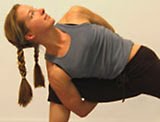
Today a yoga student of mine told me that she was afraid to practice yoga, after reading the New York Times’ article of January, 2012 entitled “Yoga Can Wreck Your Body”.
What if, after years of practice, her body began to fall apart, or she came down with a strange malady (or a common one)? It’s a good question to consider, since we are all likely to come down with various maladies and problems, regardless of how we spend our time. But which maladies, and why?
In a broad sense, since we are all going to fall to pieces and eventually die, why the fuss? Why the article? One thing is eventually going to wreck the body; if not yoga, then gardening, or snowboarding, running, smoking, overeating, stress, or accident. Our bodies last for a limited time. But, as my yoga teacher has said, “If I’m going to die for the same reasons as the person who spent every night of his life at the pub, why did I do all this yoga?”
The common assumption is that that yoga is “good for us” and that yoga makes us more vital and healthy. In the first paragraph of the Times article, the author says he naively believed that yoga was “only a source of healing, and never harm.”
How could this be? For instance, medicine is a science designed to help us. Is it always a source of healing and never harm? Only when practiced in the right way. Even then, only when God and the people involved have the good luck and right treatments to heal. It’s the same with yoga. We have a science that can be used to support health. It’s also a science designed to support health so that we have a foundation to transcend our current absorption in our perceived individuality and know more about our nature and spirit. But this is only possible with good knowledge, good application, and good fortune. Some say that it is good fortune to have the time, space and ability to practice yoga at all. To take it a step further, it is good fortune to be able to practice yoga and to find good guides, at the right times, to help minimize missteps and misperceptions. For this we need instinct, sharp perception, knowledge, help and faith.
It’s just silly to think that yoga will always help and never harm, so we need to reflect upon why and how we are approaching the practice, what the practice itself is, why it is that way, and what we can do about it.
In the article in the Times, writer William J. Broad, claims that many long-time practitioners and teachers are physically compromised by injuries, diseases, and conditions exacerbated by years of yoga practice. (I thought it odd that he went back to cases in the early 1970's for examples, that he used as an example a teacher who was performing for a camera crew when she got injured, but anyway--)
Yoga teacher Glenn Black is described as telling some of his students to give it up and not practice yoga at all. I think Black is doing students a favor when he sees that someone is going to face tremendous challenges if they are to continue with yoga: the biggest challenge a practitioner of yoga faces is to see themselves clearly, find their arrogance and ignorance, and change long-ingrained habits of behavior, thinking, and movement. Even if we recognize something that is not serving us, and know that we would like to change, we all know that it is sometimes a nearly impossible task.
Yet that is the project at hand! Patanjali, who compiled the Yoga Sutras some 2,000 years ago, is said to have created three texts: one on grammar so that people could communicate, a text on medicine to support health, and the Yoga Sutras to address our psychology and spirit. As humans, we have a physical body, mind, emotions, spirit, and intellect. Each of these facets affects the others, so the yoga practice we do is a way to see physical manifestation of the more subtle layers of ourselves. The way we behave shapes our body, and the way we think shapes our movement, for instance.
On the same note, how we behave, and the habits we carry into the practice of yoga will be amplified: if problems arise, they are likely not caused by yoga, they are caused by what we've unintentionally brought with us: the habits and approaches so much a part of us that they are often invisible to us. This is what the practice is bringing to light. This is why you must be alert. Some of the 'problems' are reflections of our own habits, and when they are small and minor it is our chance to alter them, and mitigate any unfortunate effects. (This is a best case scenario sort of idea.)
Glenn Black says, “Today many schools of yoga are just about pushing people. You can’t believe what’s going on—teachers jumping on people, pushing and pulling and saying ‘You should be able to do this by now.’ It has to do with their egos.” He’s talking about the teacher’s ego! Students of yoga are lucky when they are unaware of the battles and pettiness we yoga teachers go through. At our “worst”, we feel insecure when our classes are small, we find ourselves becoming invested in the “performance” of our students, we compare ourselves with other teachers, and what we teach against other styles. I’ve seen teachers become proud at their students’ accomplishments in yoga, and take it personally when students “disappear” from their classes. I've been that teacher. And, as a teacher, I try to be conscious of these ego-based feelings, and recognize them. I endeavor to keep my focus on the needs of students, rather than my own, and to teach simple, useful things that I believe in because they’ve been useful for me.
For teachers, there are financial and ego-based motivations for teaching and for attracting students. I know that students get excited by trying and accomplishing new things. When I taught vinyasa yoga in the first few years of teaching, I definitely collected yoga ‘tricks’ which were possible, but impressive, and would stir the enthusiasm of students. A good teacher will not be personally invested in your “successes” in yoga, but will guide you in good faith, with detachment and compassion, and all of the knowledge they have. With an inexperienced or egotistical teacher, the student has to realize that they have not only their own ego to keep in check, but that of their teacher.
Ego (which gives rise to pride and arrogance), in both the student and the teacher, is just one of the klesha (causes of suffering) described by Patanjali in the Yoga Sutras. The others, briefly, are:
As with any tool, yoga practice can be used inappropriately, and harm may come to either the tool, or what it is used upon, or both. A metaphor: Imagine using your nice kitchen chef’s knife to make a dugout canoe. First of all, the knife is the wrong tool for the job. It will be very inefficient in reaching the goal, the canoe may not turn out very well, and the knife itself will likely be ruined. It could be said that something like this has happened to the tool of yoga: yoga asana has become an exercise, a reason for the marketing of props and clothing, a fad, and a diversion. Many of us are proud of being a 'yoga practitioner' and identified with our yoga stuff and yoga lifestyle. Yoga asana was intended as one facet of a broader practice, which was not intended to be a practice with mass appeal. That said, general, simple activities are good for maintaining health and well being; advanced practices may not be appropriate for every person or every life. The article in the Times is a good reminder to be aware of what you’re doing, where it comes from, and why you’re doing it. And even when you've been working with sincerity and the best of intentions, to be alert and ready to admit small mistakes before they become big ones.
Ego drives teachers to teach beyond their means, practioners to practice beyond their capabilities. Time invested compounds our attachment to our practices. For those of us with years, or decades invested in practice, we would hesitate to give it up, considering time already invested. My high school ceramics teacher was one of the greatest teachers of my life. John Kantar was among the kindest, most dedicated teachers I’ve known, and used ceramics as a tool to teach us about history, the earth, and how to be a good person. Mr. Kantar is a very wise man. He told me that he took stock of his life every year, and gave himself the opportunity to give up what he was doing and choose a different path. It takes a lot of courage to even consider starting again, to leave the familiar for something more suitable. What's suitable may be to delve deeper into what you have begun, and it may not.
When I began the practice of yoga, I thought it was about one thing, and over time, there have been many occasions when I thought: “this is not at all what I thought it was.” These were moments when I looked at my new understanding, and decided to keep going. I believe that I was naïve, and that my first understandings were superficial, and the more I learn about yoga, the more interested I am in it (so far!).
For our own good, we need to find teachers and sources of information that we trust and stay alert. We need to practice discernment, and vigilance, to see where we are, and what we need to do, and be courageous as we proceed.

At the Thanksgiving time of year, I often think of BKS Iyengar. Mr. Iyengar, now a world-renowned teacher, was born into the influenza pandemic of 1918, and was a weak and sickly child. He began to practice yoga under the guidance of Sri T Krishnamacharya in the 1930's, and continues this work even today, in Pune, India. When I read articles and books by Mr. Iyengar, who was my teacher’s teacher for many years, I am aware of the continuous thread of acceptance and relentless inquiry. “In 1979,” he says, “Immediately after my sixtieth birthday, I had two scooter accidents. These set the clock back so much I had to begin yoga all over again as a raw beginner. … It took me more than eight years to fight and regain control over my body-and-mind. This was through my determined effort to get back into yoga, and yoga graced me to embrace it with reverence.” How many of us would bounce back after such a set back? And yet, set backs are a part of life.
In these modern times of short-term plans and thinking, I find it inspiring to reflect upon the experience of people who have a longer term view. Iyengar has practiced for nearly 80 years. My teacher has likewise put over five decades into his practice, and perhaps it is the glimpses of what the practice reveals that keeps them at it, and continues to enliven them as teachers and practitioners.
Something has to enliven us, inspire us, and encourage us, because the practice of yoga is not easy. There are challenges at every turn, and while challenge and work can be invigorating, it can also be tedious and discouraging. Iyengar, in his summary of the Yoga Sutras in the introduction of his classic book, Light on Yoga, reminds us of the distractions and obstacles on the path of yoga: Sickness, languor, laziness, doubt, indifference, sensual desire, invalid understanding, the failure to maintain a continuity of thought, and the inability to maintain that which has been attained through practice. In addition, we may experience pain, despair, and unsteadiness in the body and/or breath. In the face of these obstacles, how to keep going? The answer is found in nearly every yoga book and text: with faith and daily practice.
With a bit of writing each day, you are sure to one day have written a novel. With a few steps you can begin a long journey. Likewise, with a bit of practice each day, you will see a result over time. Commitment and consistent practice are key to success with yoga. By success I mean a rewarding experience from which you will gradually comprehend what is real and what is not, who you are and who you are not, and develop the ability to see and understand clearly.
Consistent practice is also the remedy for lack of tapas. Tapas literally means “to burn”, and in the context of yoga refers to discipline, ardent desire, that which inspires us to dedicate ourselves to a craft such as yoga. The teacher and writer Donna Farhi has compared practice to a fire: it takes a little bit of fuel, added consistently to the fire, to keep it going. A huge log will smother the fire, and smolder. A lack of fuel will cause the fire to go out. When we begin a practice, it is like lighting a fire, which must be tended regularly, lest it go out, but not over-done, in which case we’ll get bogged down with exhaustion or injury.
It is with the burning enthusiasm of tapas that we forge ahead, when we feel too busy, or tired, or happy, or hungry, or distracted, or too bored to practice. We can take these feelings into account, and then proceed with our practice. The rhythm of a consistent practice starts to move forward on its own momentum, so that it is easy to keep going, like a fire that has burned for some time, and has some glowing coals and warmth.
This is one reason that I teach month-long classes: because it is only through the experience of consistent practice that one can see the benefit of it. It is one thing to understand the theory, but another to have the experience. Another reason that I teach this way is that the Shadow Yoga practice is best learned in a series of classes, since in the beginning, students must learn the prelude sequences, and once learned must practice them. Likewise, it allows me to get to know the students in class, which is an essential aspect of the teacher/student relationship.
I am aware that it is a commitment to sign up for a month-long course. Simply this commitment, and the act of getting out of bed, and into the yoga studio each morning are a type of practice. Any challenge to your usual way of doing things and routine requires a bit of tapas to forge a new habit, or at least take a break from the existing one. In some ways, this is the most difficult part. Until we have the experience of practice, it is hard to convince oneself to get up out of a warm bed, or that extra hour of sleep, in order to come to yoga class. Over the long term, it’s worth it. Until a student has that experience, they have to trust me enough to take my word for it, or look to people of wisdom and experience whose example resonates with them.
Once do we begin practice, we are confronted with our own limitations, but also our strengths. We can be grateful that we did find the fortitude to get up and come to class, and we can be grateful that we have the strength and health to participate. It is the things that are going well, and working for us, that will support us to address the things that are not working so well.
My teachers and mentors describe set-backs, missteps, accidents. They recount times when they followed one path, then later saw things differently and changed their direction. A good teacher can save us some time, and some mistakes, but ultimately we are all on the same sort of journey, and when following a new path will sometimes find unexpected things, both difficulties and welcome surprises. Through these ups and downs, we can maintain a steady course, with consistent practice, and acceptance of the inevitable fluctuations between the days when you can’t wait to practice and everything is easy, and the days when it’s the last thing you want to do. Perhaps within the thing perceived at first as a weakness, or set back, we will find a greater strength. Despite doubts, obstacles, and setbacks: Practice anyway, with intelligence and patience.
Yoga is a very real opportunity to experience in a direct and authentic way. It is sometimes a real pain, and it is a great gift.
In Mr. Iyengar’s article, How Yoga Transformed Me, (most of the content of which can also be found in his book, Light on Life), Iyengar says of his early days:
My hard practice caused agony to my body, to my nerves, and to my mind and even to myself. I was tossed from one side to the other; sometimes the body refused to co-operate, and at other times the mind would not bear the pain. This way my body and mind oscillated. My energies were sapped and mental fatigue set in. If I did not try, the self within grew restless: if I tried, failure brought on dejection. Very often exhaustion brought me to the point of collapse. I could neither eat nor drink with comfort. Though I continued practicing yoga for years, dejection and doubt tormented me and my mind found no rest except in renewed effort. Each day was an ordeal but God’s grace forced me to make one more attempt for every failure. As I had no guide, I made enormous mistakes but I learned discrimination from observing my own errors. When circumstances forced me to live on my own, I had to go without food for days. Often I lived only on a cup of tea, but the inner flame kept on goading me to do my daily practice with zeal. Slowly, I began to feel that my body was growing in strength, my restless, agitated mind was gaining stability. Though I started with the practice in 1934, It was only in 1946 that an innate interest in yoga arose in me. ....…. Even though age is telling upon me, I am still experiencing new feelings. I do not hesitate to share the light of my new experiences with my pupils. I live in my cells and I live in my heart. I would like to practice yoga till my last breath, as a humble service to yoga. My only wish is to prostrate before God, surrendering my last breath in a yogic posture.
(this last quotation is from an article by BKS Iyengar: “How Yoga Transformed Me”)

